

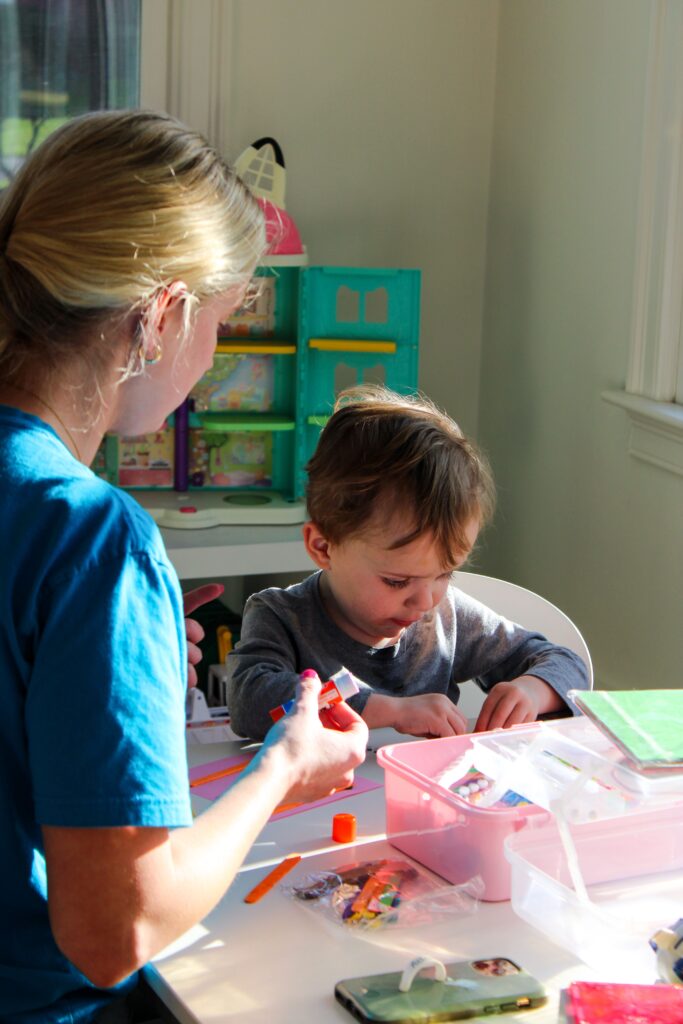
For many children with ADHD, the challenge is not that they “do not care,” “refuse to listen,” or “just need more discipline.”
ADHD affects attention, impulse control, emotional regulation, working memory, organization, and the ability to pause before acting. A child may know what they are supposed to do and still struggle to do it in the moment.
That is why therapy activities for kids with ADHD should not be about shame or punishment. They should be about skill-building.
The goal is to help children practice focus, body awareness, emotional regulation, impulse control, and flexible thinking in ways that feel safe, structured, and developmentally appropriate.
At Clear Mind Treatment, we understand that ADHD can affect the whole family. Children may struggle at school, at home, in friendships, and during transitions. Parents may feel exhausted, confused, guilty, or unsure what actually helps. Professional treatment can help families understand what is driving a child’s behavior and create a plan that supports both the child and the caregivers.
ADHD Is Often a Self-Regulation Challenge
ADHD is commonly associated with distractibility and hyperactivity, but it is also deeply connected to self-regulation.
Self-regulation is the ability to manage attention, emotions, impulses, energy, and behavior in a way that fits the situation. For a child with ADHD, this may mean learning how to:
- Stay with a task long enough to finish it
- Pause before interrupting
- Notice when their body is getting restless
- Calm down after frustration
- Shift from one activity to another
- Follow multi-step instructions
- Recover after disappointment
- Ask for help before melting down
- Use tools instead of relying on willpower
Research has linked ADHD with difficulties in executive functioning and emotion regulation, which helps explain why many children with ADHD struggle not only with focus, but also with frustration tolerance, transitions, and big emotional reactions.
This is why therapy activities work best when they are practical, repetitive, and supported by adults.
When Should Parents Seek Professional Support?
At-home activities can be helpful, but they are not a replacement for diagnosis or treatment.
Parents may want to seek professional support if a child’s attention, impulsivity, hyperactivity, emotional outbursts, or school struggles are interfering with daily life. A professional evaluation can help determine whether ADHD is present, whether anxiety, trauma, learning differences, sleep problems, or another issue may be contributing, and what type of treatment plan is appropriate.
Treatment for ADHD may include therapy, parent training, school support, behavioral interventions, skills coaching, and, for some children, medication when clinically appropriate. The right plan depends on the child’s age, symptoms, strengths, environment, and family needs.
1. The “Stop, Think, Choose” Game
This activity helps children practice the pause between impulse and action.
Create three simple cue cards:
- Stop: Pause your body.
- Think: What is happening? What do I need?
- Choose: What is one helpful action?
Then practice with low-stakes examples:
- A sibling takes your toy.
- You want to interrupt.
- Homework feels boring.
- You are losing a game.
- It is time to turn off the tablet.
Ask the child to act out the situation and walk through the three steps. Keep it playful. Use silly examples too, so it does not feel like a lecture.
Why it helps: Children with ADHD often need repeated practice building inhibitory control. Practicing when calm makes it easier to access the skill when upset.
2. Red Light, Yellow Light, Green Light
This therapy-informed activity teaches impulse control, body awareness, and emotional pacing.
Use colors to represent different internal states:
- Green: Calm, ready, focused
- Yellow: Wiggly, frustrated, distracted, excited
- Red: Overwhelmed, angry, out of control, needs help
Parents or therapists can ask:
- “What color is your body right now?”
- “What helps you move from red to yellow?”
- “What helps you move from yellow to green?”
- “What does your body feel like when it is in red?”
Then connect each color to a coping strategy:
- Green: Start homework, listen, follow directions
- Yellow: Take a movement break, drink water, squeeze a stress ball
- Red: Step away, breathe, use a calming corner, ask for adult help
Why it helps: Many children need help noticing early signs of dysregulation before behavior escalates.
3. Focus Sprints
Children with ADHD often do better with short, structured bursts of effort.
Instead of saying, “Finish your homework,” try a focus sprint:
- Choose one small task.
- Set a timer for 5 to 10 minutes.
- Remove obvious distractions.
- Work until the timer ends.
- Take a short movement break.
- Repeat if needed.
For younger children, start with two or three minutes. The goal is not perfection. The goal is practicing focused effort in a way the child can actually experience as successful.
Why it helps: Short practice windows reduce overwhelm and build confidence. They also teach children that focus is a skill that can be trained gradually.
4. The Feelings Detective Activity
Children with ADHD may react quickly before understanding what they feel. This activity helps build emotional awareness.
Ask the child to become a “feelings detective” and look for clues:
- What happened?
- What did your body feel like?
- What emotion showed up?
- What did your brain tell you?
- What did you do next?
- What could help next time?
Use drawings, emotion cards, or a simple worksheet. Keep the tone curious, not blaming.
For example:
“When your sister touched your Lego, your fists got tight, your face felt hot, and your brain said, ‘She’s ruining it.’ That sounds like anger and worry. What could your body do next time before yelling?”
Why it helps: Naming emotions can help children understand their internal experience and build more flexible responses.
5. Heavy Work and Movement Breaks
Some children with ADHD regulate better when their bodies are involved.
“Heavy work” refers to activities that use muscles and body pressure. These may include:
- Wall pushes
- Carrying books
- Animal walks
- Jumping jacks
- Pushing a laundry basket
- Chair push-ups
- Resistance bands
- Crab walks
- Yoga poses
- Obstacle courses
Movement breaks can be built into homework, transitions, or morning routines.
Why it helps: Physical activity and structured movement may support executive functioning, attention, and emotional regulation for some children with ADHD. Movement is not a reward for “good behavior.” It can be part of the treatment strategy.
6. Mindful Listening Games
Mindfulness does not have to mean asking a child to sit silently for 20 minutes. For children with ADHD, mindfulness often works better when it is brief, sensory, and interactive.
Try this:
- Ring a bell, chime, or play a soft sound.
- Ask the child to raise their hand when they can no longer hear it.
- Repeat with different sounds.
- Ask: “Was your brain quiet, busy, sleepy, or jumpy?”
You can also try mindful listening walks:
- Name three sounds you hear.
- Notice one sound far away.
- Notice one sound close by.
- Notice one sound your body makes.
Why it helps: Mindfulness-based activities may help children practice attention, self-awareness, and pausing. The evidence is still developing, so mindfulness should be viewed as a helpful tool, not a standalone cure.
7. The “First, Then” Routine
Children with ADHD often struggle with transitions and delayed rewards. A “first, then” structure gives the brain a clear sequence.
Examples:
- First shoes, then music in the car.
- First five math problems, then stretch break.
- First pajamas, then story.
- First backpack packed, then breakfast.
- First brush teeth, then choose a song.
Use visuals when possible. A small chart or picture schedule can reduce repeated verbal reminders and power struggles.
Why it helps: Predictable routines reduce cognitive load. Children with ADHD often do better when expectations are visible, concrete, and consistent.
8. The Calm-Down Menu
A calm-down menu gives children choices before they become overwhelmed.
Create a list of coping options such as:
- Take five slow breaths
- Use a weighted blanket
- Draw what you feel
- Listen to one calming song
- Squeeze a stress ball
- Sit in a quiet corner
- Drink cold water
- Ask for a hug
- Take a short walk
- Push hands against the wall
- Count backward from 20
Practice using the menu when the child is calm. During a meltdown, the brain has less access to language and reasoning, so it helps if the child already knows the options.
Why it helps: Children learn that emotions are not “bad.” They are signals that can be managed with support.
9. Organize the Backpack Together
Organization is a major executive functioning skill. Instead of expecting a child to “just be organized,” turn it into a coached activity.
Try a weekly backpack reset:
- Empty the backpack.
- Sort papers into keep, return, recycle, and parent-review piles.
- Check folders.
- Repack supplies.
- Use a checklist for what belongs in the bag.
- Celebrate completion.
Keep the routine short and predictable. Avoid turning it into a criticism session.
Why it helps: Organizational skills training has evidence for improving organization, inattention, and academic functioning in children with ADHD. These skills often need to be taught directly and repeatedly.
10. Practice “Repair” After a Hard Moment
Children with ADHD may feel intense shame after an outburst, mistake, or impulsive behavior. Repair teaches responsibility without shame.
After everyone is calm, ask:
- What happened?
- What were you feeling?
- Who was affected?
- What can we do to repair it?
- What support do you need next time?
Repair might mean apologizing, helping rebuild something, writing a note, taking space, or practicing a new strategy.
Why it helps: Repair teaches accountability while protecting a child’s sense of worth. The message becomes: “You made a mistake, and you can learn,” not “You are bad.”
What Parents Should Remember
Therapy activities are most effective when adults stay consistent, calm, and realistic.
Children with ADHD usually do not need more criticism. They need more external structure, repetition, support, and encouragement while their internal regulation skills develop.
Helpful parent reminders include:
- Skills take time.
- Behavior is communication.
- Motivation improves when tasks feel possible.
- Movement may be part of regulation.
- Visual supports often work better than repeated verbal reminders.
- Praise effort, not just outcomes.
- Calm adults help children borrow regulation.
- Professional support can help the whole family.
How Clear Mind Treatment Can Help
If your child is struggling with focus, emotional outbursts, impulsivity, school stress, or self-regulation, Clear Mind Treatment can help families better understand what is going on and what kind of support may be needed.
A professional treatment plan may include assessment, therapy, parent guidance, behavioral strategies, school coordination, and support for co-occurring concerns such as anxiety, depression, trauma, or emotional dysregulation.
For some families, ADHD-related challenges become overwhelming not only for the child, but for the whole household. Parents may feel like they are constantly managing conflict, school calls, meltdowns, routines, or guilt. Professional support can help create structure, reduce shame, and give families practical tools that fit real life.
Clear Mind Treatment provides compassionate, evidence-informed care designed to help children, teens, and families build healthier coping skills, stronger emotional regulation, and more stability at home and school.
When a Higher Level of Support May Be Needed
Some children and teens need more than occasional therapy or at-home strategies. If ADHD symptoms are combined with anxiety, depression, trauma, severe emotional dysregulation, school refusal, family conflict, or difficulty functioning, a more structured level of care may be worth exploring.
A structured treatment program can help families receive more consistent support, skills practice, and clinical guidance. This can be especially important when emotional regulation issues are affecting safety, school participation, relationships, or daily functioning.
Clear Mind Treatment can help families explore what level of care is appropriate and whether a more structured program may be helpful.
Talk to Clear Mind Treatment
ADHD is not a discipline problem. It is a brain-based condition that often requires skill-building, structure, and support.
If your child is struggling with focus, impulsivity, emotional regulation, or daily routines, Clear Mind Treatment can help you understand the next step. Our team provides compassionate care for children, teens, and families navigating ADHD, anxiety, depression, trauma, and emotional overwhelm.
Contact Clear Mind Treatment today to learn more about treatment options and support for your family.
Frequently Asked Questions
What therapy activities help kids with ADHD focus?
Helpful therapy activities may include focus sprints, visual routines, mindful listening games, movement breaks, organizational skills practice, “stop-think-choose” games, and structured emotional regulation tools.
How can I help my child with ADHD self-regulate?
Children with ADHD often need help noticing body signals, naming emotions, using calming strategies, taking movement breaks, and practicing routines. Parent support and therapy can help these skills become more consistent.
Are movement breaks helpful for kids with ADHD?
Yes, movement breaks can help some children regulate energy, attention, and frustration. Physical activity may support executive functioning and reduce ADHD symptoms for some children and adolescents.
Is mindfulness helpful for children with ADHD?
Mindfulness may help some children practice attention and self-awareness, especially when it is brief, sensory, and developmentally appropriate. It should be used as one tool within a larger treatment plan.
Does my child need therapy for ADHD?
Therapy may be helpful if ADHD symptoms are affecting school, home routines, friendships, emotional regulation, or family stress. A professional can help determine whether ADHD or another concern is contributing.
What is parent training for ADHD?
Parent training teaches caregivers evidence-informed strategies for supporting children with ADHD. This may include structure, routines, reinforcement, emotion coaching, behavior planning, and reducing negative interaction cycles.
Can ADHD cause emotional outbursts?
Yes. Many children with ADHD struggle with emotion regulation, frustration tolerance, and impulse control. Emotional outbursts may reflect lagging regulation skills rather than intentional misbehavior.
When should we seek more structured support?
More structured support may be helpful when ADHD symptoms are combined with anxiety, depression, trauma, school refusal, intense emotional outbursts, safety concerns, or significant family stress.
Sources
Parent Training in Behavior Management — CDC
Executive Functioning and Emotion Regulation in Children With ADHD
Sustained Improvements by Behavioural Parent Training for Children With ADHD: A Meta-Analytic Review
Organizational Skills Training for Children With ADHD
Working Memory and Organizational Skills Problems in ADHD
Effects of Mindfulness-Based Interventions in Children and Adolescents With ADHD