

If you have recently found yourself searching the internet for “heart palpitations,” “why can’t I breathe,” or “am I having a panic attack,” you are far from alone. Anxiety and panic disorders are currently among the most heavily researched mental health conditions worldwide.
In our fast-paced, high-stress world, it is common to feel overwhelmed. However, when worry transforms into a chronic physical and emotional burden, it is no longer just everyday stress—it is a medical condition that requires care.
In this guide, we will break down the differences between generalized anxiety and panic disorders, share the latest verifiable data on how common these conditions are, and explore the standard, evidence-based treatments used to manage them.
The Reality of Anxiety: More Than Just “Worry”
Anxiety is often misunderstood as simply “worrying too much” or feeling nervous before a big event. In reality, clinical anxiety—such as Generalized Anxiety Disorder (GAD)—is a persistent, excessive state of apprehension that can drastically interfere with daily life.
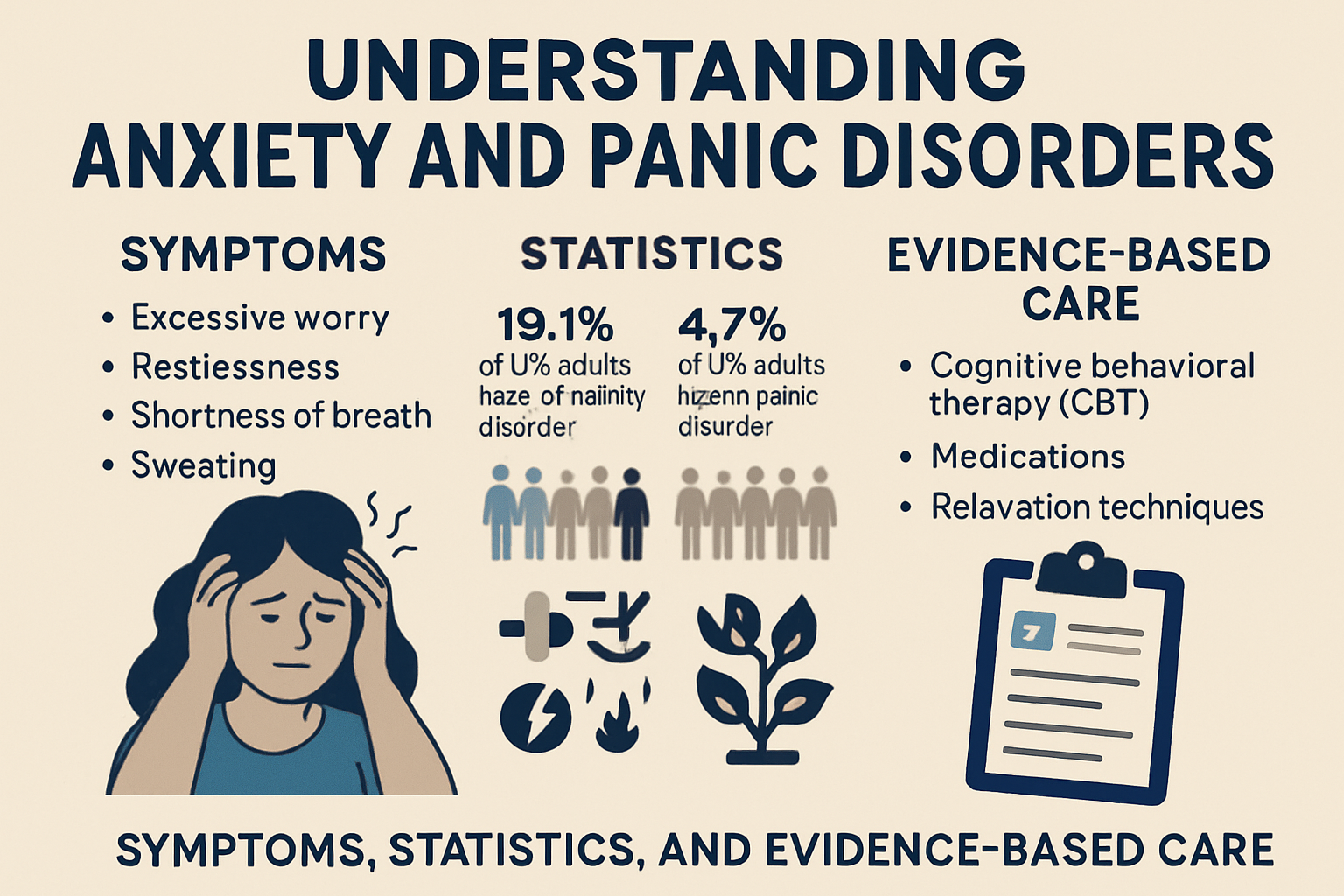
It is incredibly common. According to the National Institute of Mental Health (NIMH), an estimated 19.1% of U.S. adults experience an anxiety disorder in any given year, and approximately 31.1% will experience an anxiety disorder at some point in their lives. Women are also disproportionately affected, with NIMH data showing a past-year prevalence of 23.4% for females compared to 14.3% for males.
Common Symptoms of Anxiety Include:
• Persistent, intrusive thoughts or dread
• Restlessness or feeling “on edge”
• Difficulty concentrating (brain fog)
• Muscle tension, headaches, and jaw clenching
• Chronic fatigue or sleep disturbances
• Digestive issues (the “gut-brain” connection)
Many people live with these symptoms for years, masking their discomfort and assuming it is just their “normal” baseline. It isn’t, and living in a constant state of fight-or-flight takes a toll on the body and mind.
What is a Panic Disorder? (Panic Attack vs. Anxiety Attack)
While the terms “anxiety attack” and “panic attack” are often used interchangeably online, they are clinically distinct.
An anxiety attack usually builds gradually in response to a specific stressor (like a looming deadline or financial trouble). A panic attack, on the other hand, is a sudden, intense surge of overwhelming fear that peaks within minutes, often occurring without any obvious trigger or warning. When a person experiences recurrent, unexpected panic attacks and lives in fear of the next one, it is classified as a Panic Disorder.
According to recent data from the Centers for Disease Control and Prevention (CDC) and NIMH, about 2.7% of U.S. adults have panic disorder in a given year.
Symptoms of a Panic Attack Include:
• A pounding or racing heart (palpitations)
• Sweating, trembling, or shaking
• Shortness of breath or a feeling of being smothered
• Chest pain (often leading people to believe they are having a heart attack)
• A feeling of impending doom or a fear of dying
• Derealization (feeling detached from reality)
For more robust resources on the physical impacts of these disorders, patient education from the Anxiety & Depression Association of America (ADAA) provides excellent, science-backed information.
The Danger of “Dr. Google”
Destigmatizing mental health by talking about it online is a massive step forward, but the internet has its limits. Searching symptoms online can be validating, but it can also trigger what psychologists call cyberchondria—the escalation of health anxiety caused by internet searches.
Reading about panic attacks while you are highly anxious can actually induce a panic attack. An algorithm cannot read your medical history, perform a physical exam, or provide a clinical diagnosis. Grounding yourself in reality means recognizing when it is time to step away from the search bar and step into a doctor’s office.
The Path Forward: Evidence-Based Treatment Options
The most important takeaway regarding anxiety and panic disorders is that they are highly treatable. The clinical consensus points to a combination of psychotherapy, nervous system regulation, and, when appropriate, medication.
• Cognitive Behavioral Therapy (CBT) & Dialectical Behavior Therapy (DBT): These therapeutic modalities are the gold standard for anxiety. They help individuals identify triggers, restructure negative thought patterns, and build concrete distress tolerance skills.
• Somatic and Nervous System Regulation: Because anxiety lives in the physical body just as much as the mind, modern treatment often incorporates somatic therapies. Techniques focusing on the vagus nerve, breathwork, and grounding help “reset” the nervous system and reduce the physical severity of panic symptoms.
• Comprehensive Psychiatric Care: For many, medication is a vital tool used alongside therapy. It can help lower the baseline of daily anxiety, making it easier to actively engage in the therapeutic process.
Finding Support
Finding the right care environment is a crucial first step. Specialized clinical programs—including the treatment tracks we offer at our facility—focus heavily on these exact modalities, providing a tailored combination of CBT, somatic therapies, and psychiatric support.
If your daily internet searches revolve around trying to understand your own distress, let that be the catalyst for change. You do not have to navigate the exhausting cycle of anxiety and panic alone. Reach out to a licensed professional or contact our team to explore how structured, compassionate care can help you regain your equilibrium.
What is the difference between generalized anxiety disorder and panic disorder?
Generalized anxiety disorder is characterized by a persistent, excessive worry that influences daily life, whereas panic disorder involves recurrent, unexpected panic attacks that are sudden episodes of intense fear often without warning.
What are the common symptoms of anxiety?
Common symptoms of anxiety include persistent intrusive thoughts or dread, restlessness, difficulty concentrating, muscle tension, headaches, jaw clenching, chronic fatigue, sleep disturbances, and digestive issues.
How prevalent are anxiety and panic disorders in the United States?
According to the National Institute of Mental Health, approximately 19.1% of U.S. adults experience an anxiety disorder each year, and around 31.1% will experience one at some point in their lives. Panic disorder affects about 2.7% of U.S. adults annually.
What are the evidence-based treatment options for anxiety and panic disorders?
Effective treatments include psychotherapy such as Cognitive Behavioral Therapy and Dialectical Behavior Therapy, nervous system regulation techniques like breathwork, somatic therapies, and, when appropriate, medication to manage symptoms and improve quality of life.
Can internet searches trigger anxiety or panic attacks?
Yes, excessive online symptom searches can lead to cyberchondria, which may escalate health anxiety and trigger panic attacks, especially when individuals lack a comprehensive understanding of their symptoms and rely solely on internet information.