
Introduction to Ketamine Therapy and Bipolar Disorder
The mental health treatment environment is in a state of constant evolution, with researchers trying to find new means to treat treatment-resistant disorders. Ketamine treatment for bipolar disorder has been suggested as an attractive offer to patients whose lives were not fully relieved by taking traditional medicines when it comes to treating bipolar. Originally as an anesthetic, ketamine has proven itself to possess immense possibilities to cure the highs and lows of moodiness that are the defining feature of bipolar disorder.
The application of ketamine in the treatment of bipolar disorder may be termed as one of the greatest paradigm shifts in the treatment of mood stabilizers. Contrary to conventional drugs, which can take weeks before any appreciable response will be felt, ketamine can give a quick response once the patient is in a chronic depression state or acute mood swings, so ketamine will be of special value in that case.
Understanding Bipolar Disorder and Its Challenges
The National Institute of Mental Health (NIMH) estimates that in the United States, 2.8% of adults have bipolar disorder. It is a disorder that is distinguished by severe episodes of mood swings and depression, which are very problematic in everyday functioning, relationships, and quality of life.
Conventional treatments involve mood stabilizers, antipsychotics, and antidepressants; however, most patients still have breakthrough symptoms despite taking the medications. Bipolar disorder that is resistant to treatment creates specific challenges because the affected individuals go through several drugs without finding consistent stability. This fact has contributed to the desire to explore other methods, such as ketamine and protocols for treating bipolar disorders.
The Role of Ketamine in Mood Stabilization for Bipolar Disorder
The use of ketamine for mood stabilization differs from the psychiatric drugs that are traditionally used. Rather than affecting serotonin or dopamine receptors, ketamine affects glutamate receptors and induces neuroplasticity; it helps the brain to form new neural connections.
Key mechanisms of ketamine’s mood-stabilizing effects include:
- Rapid modulation of the glutamatergic system
- Enhancement of brain-derived neurotrophic factor production
- Promotion of synaptic connectivity in mood-regulating regions
- Reduction of inflammatory markers associated with depression
- Restoration of neural pathways disrupted by chronic mood episodes
Research published through the American Journal of Psychiatry (AJP) has reported the potential of ketamine to induce antidepressant effects in a few hours as opposed to weeks, giving promise to patients in serious distress.

Bipolar Ketamine Infusion: What It Involves
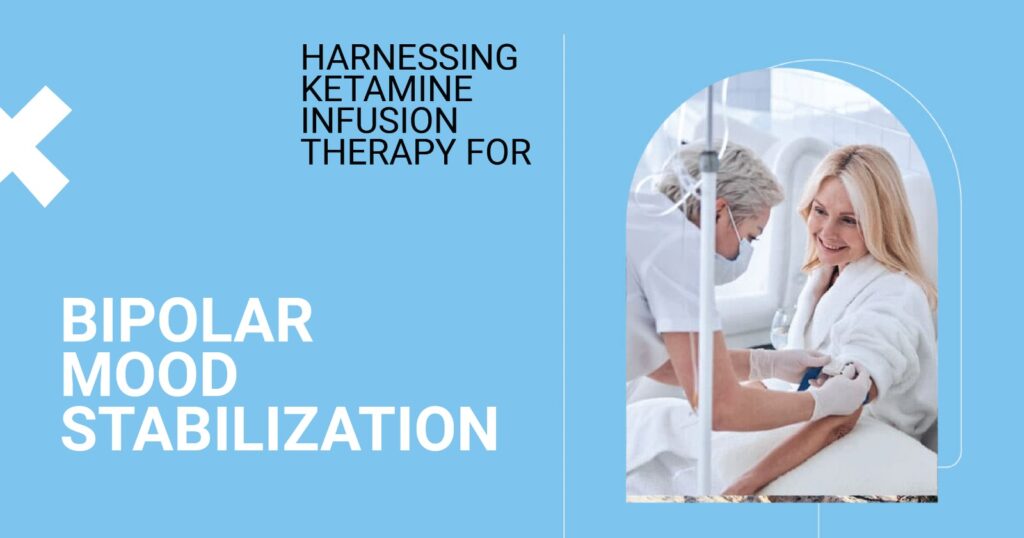
Treatment by bipolar ketamine infusion is generally something that is done in a medical environment and administered precisely. The treatment involves a sub-anesthetic dose administered intravenously, which leaves patients awake but with a treatment effect.
Table 1: Bipolar Ketamine Infusion Protocol Overview
| Treatment Aspect | Details |
| Administration Method | Intravenous infusion in clinical setting |
| Typical Dose Range | 0.5 mg/kg over 40 minutes |
| Initial Treatment Series | 6 infusions over 2-3 weeks |
| Maintenance Schedule | Monthly or as needed based on response |
| Session Duration | 40-60 minutes plus monitoring |
| Monitoring Period | 1-2 hours post-infusion observation |
Patients can develop dissociative effects, perception changes, and slight elevations of blood pressure during infusion sessions. The process is monitored by medical staff constantly and supported. The majority of patients report that they are relaxed when getting treated, and they have an improved mood 24-72 hours after the experience.
The Impact of Ketamine Depression Therapy on Bipolar Symptoms
The use of ketamine in depression therapy has shown unique potential in treating the depressive stage of bipolar disorder, which is usually harder to manage as compared to the manic phase. Bipolar depression is often unresponsive to the conventional antidepressants and is very dangerous with suicidal tendencies.
Clinical observations of bipolar disorder ketamine treatment reveal several therapeutic benefits:
- Rapid reduction in depressive symptom severity
- Decreased suicidal thoughts within hours of treatment
- Improved cognitive clarity and concentration
- Enhanced motivation and engagement in daily activities
- Better sleep quality and energy regulation
Notably, the ketamine mental health approach of treating bipolar patients should take extreme precaution with the risks of mood swings. Clinicians are required to strike a balance between the advantages of quick relief from depression and the possibility of provoking manic attacks; that is why controlled use is necessary.
Exploring Current Ketamine Bipolar Research
Bipolar studies with ketamine are still ongoing and expanding current existing knowledge about the effectiveness as well as the best use of this treatment. Recent literature has been dedicated to the aspects of which patients respond most to ketamine treatment and the ways of maintaining the results in the long run.
Table 2: Key Findings in Ketamine Bipolar Research
| Research Focus | Current Findings |
| Response Rate | 50-70% of treatment-resistant patients show improvement |
| Onset of Action | Antidepressant effects within 2-24 hours |
| Duration of Benefits | Initial relief lasting 3-14 days on average |
| Safety Profile | Generally well-tolerated with temporary side effects |
| Manic Switch Risk | Lower than traditional antidepressants when monitored |
| Optimal Dosing | Sub-anesthetic doses most effective for mood |
Further studies are being conducted on the long-term effects of ketamine, ideal maintenance measures, and possible interactions with other treatment therapies. Intranasal and oral ketamine preparations are also under examination by scientists, which can widen the access to treatment.
Comparing Ketamine Mental Health Treatment Approaches
There are a number of ketamine delivery approaches used to manage bipolar disorder, and each one has its own benefits. The most researched method is intravenous infusion, which provides patients with accurate dosage and quick reaction. The FDA-approved intranasal esketamine (Spravato) is an option in the management of treatment-resistant depression.
In the comparison, clinicians take into account such factors as patient preference, treatment history, symptom severity, and practical aspects such as the clinic’s accessibility. Others have found it useful to use ketamine therapy in conjunction with other conventional mood stabilizers, psychotherapy, or lifestyle interventions.

Addressing Common Concerns and Misconceptions about Ketamine Therapy for Bipolar Disorder
Though there are increasing reasons to support the use of ketamine and bipolar disorder, misconceptions are still present. Other people are concerned about the possibility of addiction, whereas others wonder whether ketamine is actually a valid medical option, considering it is a recreational drug.
Clinical ketamine use is very different from recreational use. Medical protocols come with closely regulated doses where the administration is done in controlled environments with suitable screening and follow-up. Ketamine therapy for bipolar disorder has a positive safety history, and the side effects are manageable when used properly.
Patients are expected to freely share their issues with their treatment providers, including inquiries about the long-term outcomes, the interactions with the existing medications, and the expectations of the results.
Future Directions for Ketamine and Bipolar Disorder Treatment
The future of ketamine in treating bipolar disorder is bright in light of the development of research and the optimization of clinical guidelines. Researchers are still studying biomarkers, which are predictive of response to treatment, how best it can be maintained, and new methods of delivery that may enhance ease and access.
A Clear Mind Ahead: Taking the Next Step Toward Mood Stability
Knowledge of ketamine as a treatment for bipolar disorder will enable patients to make better decisions regarding their mental health. Ketamine therapy is not the right treatment option for all people, yet it provides vital hope to people who have not managed to find relief in traditional methods.
When living with or loving a sufferer of bipolar disorder, professional advice can do wonders in its innovative approach to treatment. Clear Mind Treatment specializes in comprehensive mental health treatments aimed at assisting the victims in attaining long-term mood balance and better life quality.
Contact Clear Mind Treatment and find out why ketamine treatment can be the answer to your situation and start your path to a healthy mental state.
FAQ’s
1. What is the impact of ketamine depression therapy on bipolar disorder symptoms?
Ketamine depression treatment has the ability to quickly lessen the depressive symptoms in bipolar patients in a few hours as opposed to weeks. At the end of treatment, patients often note a reduction in hopelessness, an increase in motivation, and a decrease in suicidal ideation. These are the effects that render ketamine very useful in acute bipolar depressions that were not responding to the conventional drugs.
2. How does ketamine infusion therapy work for mood stabilization in bipolar disorder?
Ketamine functions to counteract glutamate receptors and induce neuroplasticity, which allows the brain to develop new neural connections in mood-governing areas. In contrast to conventional drugs that act on the serotonin systems, the exceptional action of ketamine has a quick antidepressant effect with long-term brain benefits. This method is a new route for patients who are not responding to the traditional mood stabilizers.
3. What are the latest findings in ketamine bipolar research?
According to recent studies, ketamine therapy is reported to improve significantly (50-70 percent) in treatment-resistant bipolar patients. Research also indicates that ketamine has a lower likelihood of causing manic episodes than the traditional antidepressants when properly monitored. The research is proceeding with the idea of trying the best dosing guidelines and maintenance measures towards long-term gains.
4. How do different ketamine mental health treatment approaches compare for bipolar disorder?
IV ketamine infusion provides accurate dosing and fast effect; hence, it is the most researched method. Intranasal esketamine is a convenient alternative that has received FDA approval for treating treatment-resistant depression. Clinicians assist patients in selecting the best approach depending on the severity of symptoms, history, and personal preference of treatment.
5. What are common concerns and misconceptions about ketamine therapy for bipolar disorder?
The recreational history of ketamine makes it a cause of worry to many people who either fear the possibility of addiction or doubt the legitimacy of ketamine as a medicine. Traditional ketamine clinical therapy, however, incorporates sub-anesthetic doses of ketamine under strict supervision, which have a positive safety profile. Honest dialogue with treatment providers contributes to the personalization of issues and drawing of realistic expectations regarding the results.